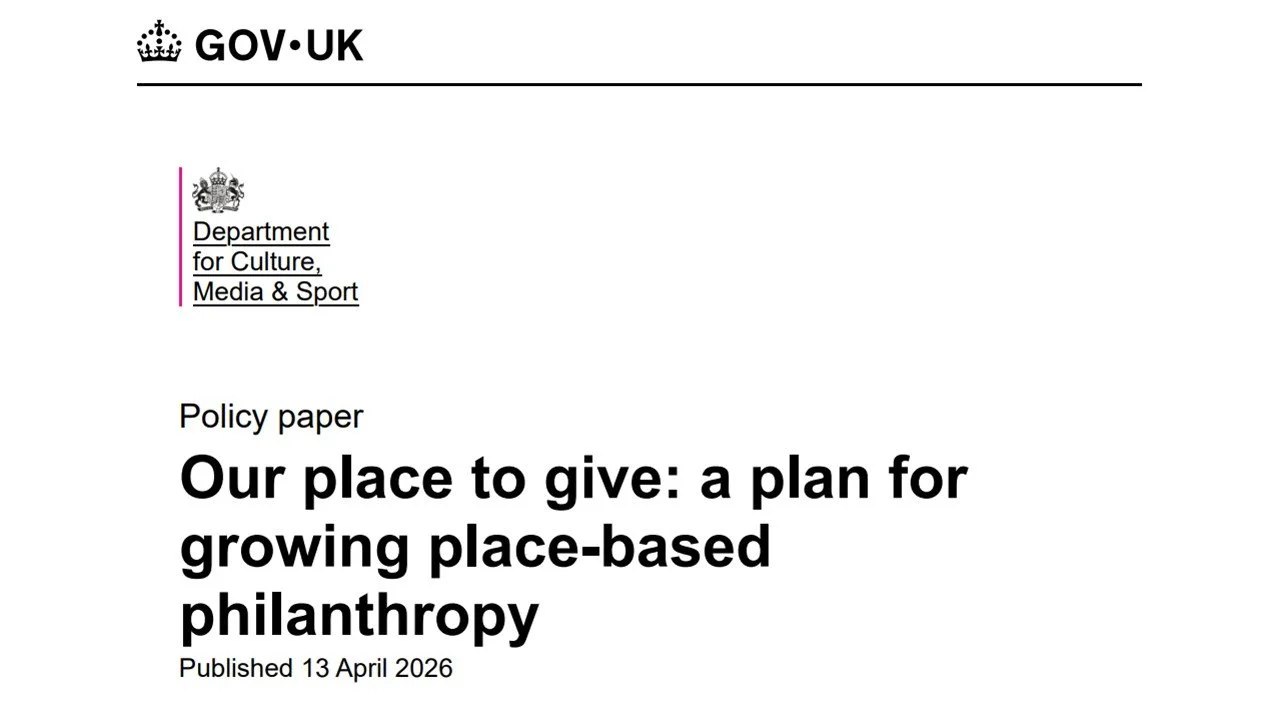
On the 13th April the UK government launched their new philanthropy strategy: Our place to give: a plan for growing place-based philanthropy. This sets out six actions under three pillars:
Pillar one: Connecting philanthropy with place
Pillar two: Establishing better philanthropic partnerships
Pillar 3: Unlocking further philanthropic investment
It is good to have the government taking philanthropy seriously in this way and recognising the value of private giving in helping communities to thrive. The document showcases a range of examples of philanthropy in action and emphasises the need for collaboration. The emphasis on place feels right, as this focus can make philanthropy, which is often full of an overwhelming array of choices, feel manageable. Place-based giving puts listening to local communities at its heart, increasing the likelihood of effective interventions.
From a personal point of view, as co-founder of Bath Women’s Fund, I am proud to see our Giving Circle included as an example of place-based giving. The main emphasis of the plan is on wealthy philanthropists so we are the one example waving the flag for ‘everyday’ philanthropists giving at modest monthly levels. Giving Circles such as ours are a great way of spreading a culture of giving.
As someone trying to build the Philanthropy Advice profession, I was also pleased to see the inclusion of Action 5: ‘Strengthening the provision of philanthropic advice in the financial services sector’ featured in the government’s plan as a key way to unlock philanthropy. There has been a lot of good work done by Cath Dovey of NPC, Pro Bono Economics, Onward Philanthropy and others advocating for this and there is a very clear business case, for example, showing that younger wealthy people will seek out financial advisors who offer philanthropy advice. Financial service professionals are well placed, but not yet equipped, to talk about philanthropy with their clients. Research shows they lack the incentives, confidence and knowledge to do this.
This is where the government has missed a trick by not explicitly mentioning Philanthropy Advisors in their plan. As an emerging profession, a namecheck would have been welcome. We have a very important part to play - we are the group of professionals whose primary motivation is to unlock private funds for good and have the expertise to guide wealthy individuals. We are skilled intermediaries who act as a bridge between wealthy donors and local charities and communities and advocate for good practice in funding. The government could make use of the excellent Philanthropy Advisors already operating in the UK and encourage what I call a ‘raise and refer’ approach to philanthropy. In my vision this is where financial services advisors are equipped to confidently raise the topic of philanthropy with their clients and then refer to specialist Philanthropy Advisors. Government funding could strengthen the system by supporting the development of shared standards, a code of conduct, and an accessible directory of Philanthropy Advisors.
So while there is much to like in this government plan, not championing Philanthropy Advisors is a missed opportunity. My plea is to include Philanthropy Advisors in the proposed working group and to seriously consider the adoption of a ‘raise and refer’ approach.